When searching for information about Annie Brosterhous, one quickly encounters a mix of verified facts and unsubstantiated claims. A former athlete who played for Cavigal Nice in Nationale 1 in the 1980s, and later a physical education teacher, she is primarily associated with her marriage to Arsène Wenger. However, her own career deserves to have documented facts distinguished from those that are not.
Sports Archives and the Real Career of Annie Brosterhous
Annie Brosterhous is often presented as a “French Olympic basketball player.” The problem is that no official source supports this claim, neither from the International Olympic Committee nor from the French Basketball Federation.
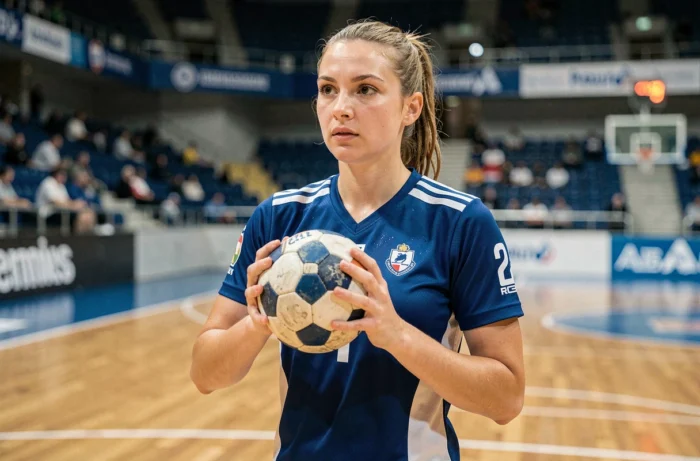
What is confirmed is her time at Cavigal Nice in Nationale 1 during the 1980s. At that time, the Nice club had a competitive women’s section in the French championship. Playing at this level required serious physical and tactical commitment, during a period when women’s basketball received almost no media coverage.
You can learn more about Annie Brosterhous and her sports career, but it is important to keep in mind that opinions vary on this point: the line between verified facts and embellished biographies remains blurred for athletes of this generation.
After her playing career ended, Annie Brosterhous turned to teaching. Several sources present her as a physical education teacher, without ever mentioning the institution or the specific period. This lack of documentation is common for female athletes from the 1980s whose public visibility only emerged through association.
French Women’s Basketball in the 1980s: Conditions to Know
At Cavigal Nice, playing in Nationale 1 meant balancing intensive training with a professional job on the side. Players of that era often combined sports and employment, as the professional status in the strict sense did not exist for the majority of them.
Nationale 1 was the highest level of women’s basketball in France. However, the conditions were very different from what we see today: limited resources, non-existent or symbolic salaries, and a sports press that rarely showed interest in women’s competitions.
Institutional recognition of women’s basketball in France took decades. The players of the 1980s helped to structure a movement whose results would only become visible from the 2010s, with the international performances of the French team.
Annie Brosterhous and Arsène Wenger: What is Documented
The relationship between Annie Brosterhous and Arsène Wenger is the most publicized aspect of her biography. Their daughter Léa is known to the public, but the biographical details circulating about her are not based on verifiable sources.
The exact circumstances of their meeting are not established by reliable sources. Several web pages present narratives without any interviews or dated documents to confirm them.
Arsène Wenger has publicly mentioned several times the difficulty of balancing his coaching career with family life. The pace imposed by managing a Premier League club left little room for couple life, a fact he has stated candidly in interviews.
Léa Wenger, a Discreet Presence in the Public Eye
Léa Wenger has occasionally been seen alongside her father at sporting events. Her sporadic presence in the stands has even caused confusion on social media, with some users mistaking her for a partner of the Alsatian coach.
This gap between the family’s claimed discretion and the constant media attention surrounding Arsène Wenger aptly summarizes the situation.

Unverified Information Circulating Online
A significant portion of what is read about Annie Brosterhous is based on unverified claims. Several points raise concerns:
- Participation in the Olympic Games: no official source attests to this
- Selection for the French national team: no accessible federal list mentions her name
- Date of birth: repeated by some profile sites, but without identifiable primary sources
- Height: the figures circulating are estimates, not documented data
This mechanism of propagation affects many personalities known by association. One site publishes unverified information, others repeat it, and the repetition eventually creates an appearance of reliability.
Annie Brosterhous’s career at Cavigal Nice, her teaching profession, and her family life form the verifiable foundation of her biography. The rest, at this stage, falls into the realm of approximation. In a subject where primary sources are so lacking, sticking to documented facts remains the only reliable approach.


