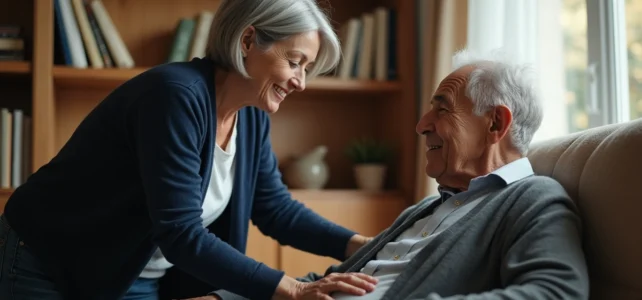
The home care of seniors relies on a combination of devices whose technical coherence determines quality of life as much as budget. We observe that families often underestimate the interaction between human assistance, housing adaptation, and monitoring tools, which leads to costly disruptions in care pathways.
Expansion of authorized actions for nursing assistants: impact on home care
The redefinition of the intervention scope for nursing assistants significantly changes the care services available at home. New actions, previously reserved for nurses, can now be performed by trained nursing assistants. This evolution reduces response times and streamlines coordination among home healthcare professionals.
For seniors with loss of autonomy classified in GIR 3 or 4, this means fewer nursing visits to schedule and a more responsive daily care. In practice, routine care is delegated more quickly, freeing up nursing time for complex technical procedures.
We recommend that families check with their home care service if the caregivers have completed the relevant training. Not all home care services have yet integrated these changes into their organization, and the quality gap between structures is thus accentuated. Specialized resources for supporting seniors are available at https://www.aide-seniors.fr/, which lists services tailored to each situation.
MaPrimeAdapt’ and senior housing adaptation in 2026
MaPrimeAdapt’ funds up to 70% of adaptation work for very low-income households, with a spending cap of 22,000 euros excluding tax. The program targets individuals over 70 years old, and from 60 years old in cases of recognized loss of autonomy (GIR 1 to 6).
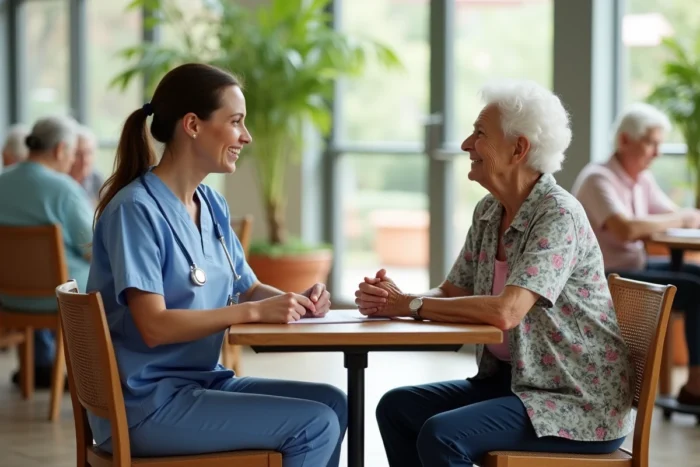
Housing adaptation is not limited to installing a grab bar in the bathroom. A prior occupational therapy assessment identifies fall risk areas, accessibility issues, and necessary adjustments for mobility with a walker or wheelchair.
The most common types of work include:
- Replacing the bathtub with a level-access shower with a folding seat and non-slip flooring
- Installing a stairlift or converting a living space on the ground floor to eliminate movement between floors
- Widening doors and removing thresholds to allow wheelchair passage
- Implementing automatic motion-detecting lighting in hallways and bathrooms
A common mistake is to undertake work without coordinating with the APA aid plan. Housing adaptation and human assistance must be sized together, otherwise, you risk funding an adaptation that the level of dependency will render insufficient in the short term.
Reform of employer contributions and the real cost of home care
A reform scheduled for summer 2026 raises the age from which a senior can employ a home caregiver without paying employer contributions from 70 to 80 years. For seniors aged 70 to 79, the net cost of home care increases significantly.
This change alters the financial decision-making for many families. A 72-year-old senior in GIR 5, who previously employed a housekeeper for a few hours a week without contributions, will now have to factor this additional cost into their budget. The temptation to reduce the number of hours is real, but it can accelerate the loss of autonomy.
We recommend recalculating the out-of-pocket expenses considering the APA, the tax credit for personal services, and this new situation. A precise financial assessment, conducted with the CLIC or local information point, helps avoid unpleasant surprises.
Teleassistance and connected monitoring: technical selection criteria
The teleassistance market has diversified well beyond the classic pendant. Current devices integrate automatic fall detection, geolocation for seniors with cognitive impairments, and motion sensors that alert in case of prolonged inactivity.

The choice of a system depends on the senior’s profile:
- Autonomous senior living alone: connected bracelet or watch with alert button and fall detection, sufficient in most cases
- Senior with early cognitive impairments: device with GPS geolocation and configurable safety perimeter, coupled with alerts to caregivers
- Senior with advanced loss of autonomy: package of home sensors (motion, door opening, connected bed) linked to a teleassistance platform with rapid intervention
The reliability of fall detection varies significantly from one manufacturer to another. False positives (unwanted alerts) and false negatives (undetected falls) remain a technical issue. Before subscribing, we advise asking for the detection rates of the device and ensuring that the call center operates continuously, including on holidays.
The monthly cost of teleassistance is partially covered by the APA and qualifies for a tax credit. For an isolated senior, teleassistance is the first investment to make even before housing adaptation, as it immediately secures home care.
Supporting seniors on a daily basis becomes more effective when the devices are interconnected rather than stacked. A coherent aid plan, regularly reassessed with professionals in the field, remains the best protection against unanticipated loss of autonomy.