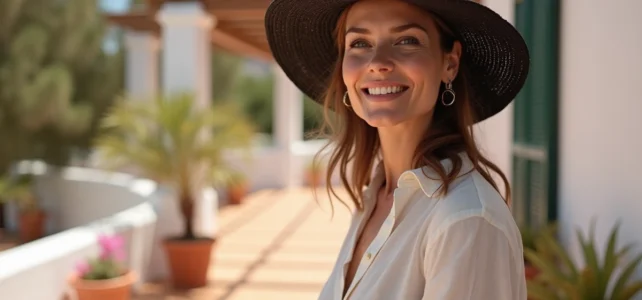
You place your hand on a black hat in full sunlight and the heat is immediate. On a white hat, the surface remains warm. This difference in sensation leads many people to instinctively choose white. The reality is more nuanced: the color of the hat matters, but it is not enough to guarantee real sun protection.
UPF rating of the fabric: a criterion that color alone cannot replace
Before comparing black and white, a technical detail changes the game. Fabrics designed for sun protection can be certified with a UPF (Ultraviolet Protection Factor) rating. A UPF 50 fabric allows only one-fiftieth of UV rays to pass through, regardless of its color.
In practical terms, a white hat made of dense UPF 50 certified fabric protects the skin better than a black hat made of fine cotton without certification. The Skin Cancer Foundation reminds us that this rating is much more discriminating than the color of the fabric when assessing UV protection.
Have you ever noticed that some hiking hats seem thin but carry a UPF 50+ label? It is the tight weave and treatment of the fabric that do the work, not the color visible to the eye. To delve deeper into this comparison between shades and materials, a comprehensive guide on the black and white hat on Tendancez-vous details the situations where each color has the advantage.

Black or white hat: what each color really does against UVs
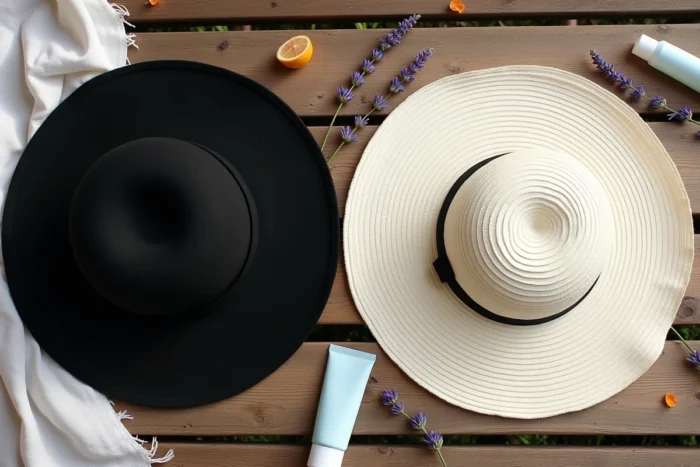
Dark colors (black, navy blue, dark gray) absorb more light, including ultraviolet rays. A black fabric blocks more UV than a white fabric of equal mesh density. This is a simple physical fact: less radiation passes through the fiber.
White and light shades, on the other hand, reflect a large portion of light. The fabric heats less, keeping the head cooler. However, a larger portion of UV rays can penetrate a loose weave of light color.
And what about intermediate colors?
Tests on clothing in high heat conditions show that shades like light yellow or light gray remain cool while offering adequate protection. These shades are rarely mentioned in the black versus white debate, even though they represent a good compromise between thermal comfort and UV filtration.
Beige, khaki, and olive green behave similarly. If you are looking for a hat for long outdoor days, these colors deserve to be considered as much as black or white.
Hat shape and ventilation: more decisive than color in extreme heat
During heatwave episodes, color becomes secondary if the hat does not provide enough coverage or traps heat. Several specialists emphasize two often-overlooked parameters.
- The width of the brim determines the shaded area on the face, ears, and neck. A wide brim protects these three areas, whereas a cap leaves the ears and neck exposed.
- The ventilation of the hat (eyelets, breathable mesh, space between the crown and the head) allows air to circulate and limits heat buildup under the fabric.
- The density of the weave matters more than the apparent thickness. A thin but tight fabric filters UVs better than a thick fabric with a loose weave.
A wide-brimmed hat with side vents, even in a light color, generally provides better protection than a black hat without a brim or ventilation. The shape and airflow take precedence over color in extreme heat situations.
Skin sun protection: the hat does not do it all
Dermatologists and French prevention campaigns remind us of a straightforward point: the hat protects the scalp and partially the face, but it does not replace sunscreen on exposed areas.
Three areas of the face are often forgotten when applying sunscreen: the contour of the ears, the bridge of the nose, and under the chin (which receives light reflected from the ground). A wide-brimmed hat reduces exposure to these areas without completely eliminating it.
The Skin Cancer Foundation recommends combining multiple protections:
- A wide-brimmed hat, ideally made of UPF certified fabric
- A sunscreen with an appropriate SPF, reapplied regularly
- Sunglasses to protect the area around the eyes
- Covering clothing during peak exposure hours
No hat, regardless of its color, provides sole protection against skin cancer. It is the combination of protections that truly reduces risk.
Which hat to choose based on your situation
Are you spending two hours on a terrace one summer noon? A white or beige hat with a medium brim is sufficient. Are you going hiking all day under direct sunlight? Opt for a wide-brimmed model with UPF certified fabric, regardless of the color.
For prolonged outdoor work (gardening, construction, agriculture), a dark hat made of dense fabric offers better UV protection, provided it has good ventilation to avoid heat stroke. Technologies like ColdBlack treatment, applied to certain dark textiles, reduce heat absorption while maintaining UV filtration of black.
The final choice depends on the use: short exposure in the city or a long day outdoors, the priorities are not the same. A white hat keeps the head cooler, while a black hat filters UVs better. The best compromise remains a UPF certified fabric with a wide brim and ventilation, in the color that suits you.