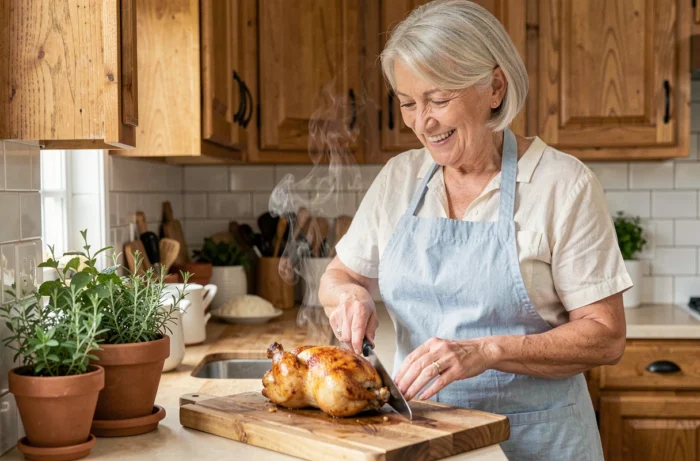
Chicken is among the most consumed meats in France, across all age groups. For people over 65, its nutritional profile – high in protein and low in fat – makes it a regularly recommended food. Understanding its role in the diet of seniors requires taking into account the physiological constraints related to aging.
Chicken Protein and Sarcopenia: A Less Direct Link Than One Might Think
Sarcopenia, the progressive loss of muscle mass and strength associated with aging, is a major public health issue among seniors. Chicken, due to its high protein density, often appears as an obvious nutritional response. The reality is more nuanced.
A synthesis reported in September 2026 indicates that, among adults over 65, the effects of animal and plant proteins on lean mass are still debated. Some meta-analyses find comparable results between animal and plant sources. Therefore, chicken does not have a systematically demonstrated advantage over legumes or other protein sources for preserving muscle.
What emerges from the available data is that total protein intake and meal regularity matter more than the choice of a single source. The scientific statement from the European Association of Preventive Cardiology, published in the European Journal of Preventive Cardiology on September 8, 2026, specifies that increased protein intake alone is not sufficient to reduce sarcopenia.
The association with resistance exercise (muscle strengthening) remains the most documented lever. A senior who eats chicken at every meal without appropriate physical activity would gain only limited benefits for their muscle mass.
Several publications relayed by health articles on Cap Bien-être explore this relationship between protein intake and muscle maintenance after 65, reminding that the overall context of the meal takes precedence over an isolated food.
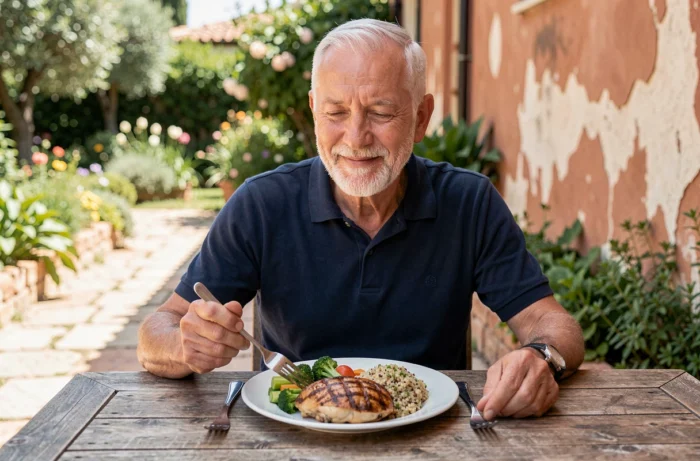
Chicken and Kidney Disease in Seniors: An Underestimated Constraint
Nutritional recommendations encouraging a high protein intake among the elderly face a common obstacle: chronic kidney disease affects a significant portion of seniors. With age, kidney function naturally declines, and a notable proportion of people over 70 experience varying degrees of renal insufficiency.
For these patients, an excess of animal proteins – including those from chicken – can accelerate the deterioration of kidney function. Nephrologists then recommend moderating protein intake, which directly contradicts anti-sarcopenia advice. This nutritional dilemma has no single answer: it depends on the stage of kidney disease, the patient’s weight, and their level of physical activity.
Chicken remains a more interesting option than processed meats or deli meats in this context, as it contains less sodium and saturated fats. However, it cannot be consumed in unlimited quantities simply because it is a lean meat. Individualized medical follow-up is necessary to adjust portions.
Texture and Food Safety: Two Overlooked Criteria in Recommendations
The nutritional value of chicken does not summarize its importance for seniors. Two concrete aspects weigh on daily consumption: the texture of the meat and food safety during preparation.
Texture and Swallowing Disorders
Dysphagia (difficulty swallowing) affects an increasing proportion of people over 75. A grilled chicken breast, dry and fibrous, can pose dangerous choking hazards. Slow cooking methods (braising, stewing, broth) change the texture of chicken and make it much more accessible for seniors suffering from swallowing disorders.
Some concrete guidelines for adapting preparation:
- Chicken cooked in broth or sauce easily falls apart with a fork, reducing the risk of choking compared to dry oven cooking
- Thighs and drumsticks, naturally more tender than breast due to their collagen content, are better suited for individuals with chewing difficulties
- Blending or chopping cooked chicken allows for maintaining protein intake even in cases of severe dysphagia, without systematically resorting to industrial dietary supplements
Handling and Cooking: A Real Bacterial Risk
Raw chicken is one of the most common vectors of Salmonella and Campylobacter. In seniors, whose immune systems are often weakened, a foodborne illness can lead to hospitalization. Cooking thoroughly (complete disappearance of any pink trace) and washing hands after handling raw meat are not just simple comfort precautions.
Older individuals living alone, sometimes facing decreased visual acuity or fatigue that shortens time spent in the kitchen, are particularly exposed to insufficient cooking.
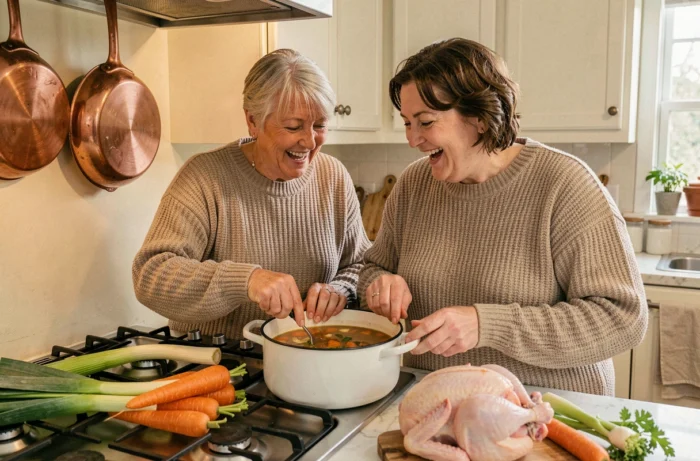
Chicken and the Overall Dietary Balance of Seniors: Beyond Just Meat
Presenting chicken as a “health ally” only makes sense within the framework of a varied diet. Among seniors, malnutrition affects those who reduce the variety of their diet more than those who lack a specific food. A meal composed solely of chicken breast and white rice provides neither the fibers, nor the vitamins C and E, nor the polyphenols necessary for healthy aging.
Poultry provides B vitamins (notably B3 and B6) and zinc, a trace element involved in the functioning of the immune system. These nutrients are valuable, but they do not replace the need for regular intake of fruits, vegetables, legumes, and dairy products.
- The zinc from chicken contributes to maintaining immune defenses, particularly challenged in older adults during winter periods
- The B6 and B3 vitamins participate in energy metabolism and the normal functioning of the nervous system
- The heme iron in chicken is better absorbed than plant iron, which can help prevent the anemia frequently seen in seniors
The protein interest of chicken for seniors is real, but it remains conditioned by physical activity, kidney status, and the diversity of the rest of the plate. Preparation methods matter as much as the raw nutritional value, especially after 75, when chewing and swallowing are no longer taken for granted.


