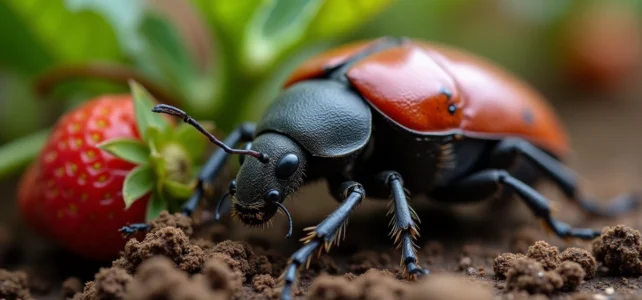
The pseudoophonus rufipes, also known as the strawberry beetle, is a dark brown carabid beetle about 15 mm long, with elytra covered in a golden velvet. Found in gardens, vegetable patches, and wastelands, it primarily feeds on seeds and, to a lesser extent, on small soil invertebrates. Its abundant presence in a garden often leads to seeking solutions for control, while its role in the ecosystem deserves to be understood before any intervention.
Pseudoophonus rufipes: an auxiliary carabid before being a pest
The family of carabids includes beetles recognized as useful predators in integrated farming systems. The pseudoophonus rufipes is no exception. Its seed-eating diet leads it to consume seeds of weedy plants (weeds), which helps limit their proliferation in the vegetable garden and flower beds.
The Hypp encyclopedia from INRAE further specifies that this seed-eating insect can be interesting in the fight against weeds. At the same time, it consumes larvae and small invertebrates present in the soil litter, thus contributing to the natural regulation of certain pests.
The nuance is there: the pseudoophonus rufipes only causes significant damage to strawberries, where the adult tears off the achenes and can cause wounds on the fruits, leading to their rot. For all other garden crops, it is more of a discreet ally than an enemy. Before considering managing pseudoophonus rufipes with Perspectives Jardin, it is worth assessing the actual extent of the problem on your plants.
Damage to strawberries and sensitive crops: recognizing the signs
On strawberries, the damage is characteristic. The adult cuts through the fruit’s epidermis to reach the achenes (the small seeds on the surface of the strawberry). The resulting wound serves as an entry point for fungi responsible for gray rot.
Signs to watch for:
- Strawberries showing irregular holes on the surface, with torn achenes and not simply absent
- Rot that develops rapidly on injured fruits, even in dry weather
- The presence of dark brown adults with reddish legs, hidden under leaves or mulch during the day
- Visible nocturnal activity with a flashlight, as the beetles are attracted to light
In other vegetable crops (tomatoes, zucchinis, salads), the pseudoophonus rufipes does not cause significant damage. If brown beetles are moving around your garden without affecting your strawberries, intervention is probably not justified.
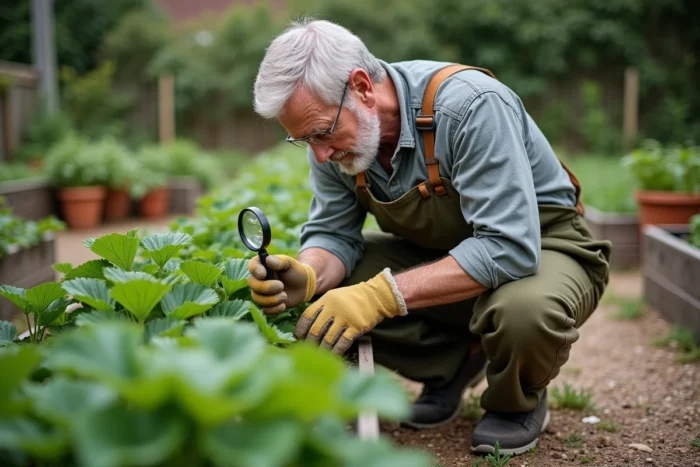
Natural methods to limit pseudoophonus rufipes in the vegetable garden
The goal is not to eradicate the species but to protect sensitive crops while retaining the benefits of its presence. Several approaches work without resorting to chemical treatments.
Physical barriers around strawberries
The most direct method is to prevent access to the fruits. Fine-mesh wire cloches placed over the rows of strawberries block the adults, which move along the ground. Unlike slugs, the beetles do not climb smooth vertical surfaces.
A woven fabric mulch (rather than organic mulch) reduces the available shelters close to the plants. The pseudoophonus rufipes hides during the day under plant debris, thick litter, and boards placed on the ground. Removing these refuges to less than a meter from the strawberries decreases the pressure.
Light attraction trapping
The strawberry beetle is strongly attracted to light sources at night. A light trap placed away from sensitive crops can divert part of the population. A simple container of soapy water under a garden solar lamp effectively captures adults during the summer activity period.
Encouraging natural predators
Hedgehogs, toads, and certain nocturnal birds consume carabids. A garden that welcomes these auxiliaries (wood piles, ponds, diverse hedges) naturally regulates populations without direct intervention. The most effective natural treatments are often structural: designing the garden so that auxiliary fauna can settle there permanently.
Confusion with cockroaches: correctly identifying pseudoophonus rufipes
Every summer, many gardeners confuse the beetle with a cockroach. This mistake sometimes leads to the use of inappropriate pesticides, harmful to the rest of the garden’s fauna.
Several criteria help to distinguish:
- The pseudoophonus rufipes has hard, slightly velvety elytra, while the cockroach (blattodea) has membranous wings and a flattened body
- The antennae of the beetle are shorter and thicker than those of a German or Oriental cockroach
- The tops of the tarsi (the ends of the legs) are distinctly hairy in the beetle, smooth in the cockroach
- The beetle primarily lives outdoors, in the soil and under stones, while cockroaches inhabit warm, humid indoor spaces
A brown insect found in the garden in summer is rarely a cockroach. Checking the velvety appearance of the elytra is usually enough to rule out the cockroach hypothesis.
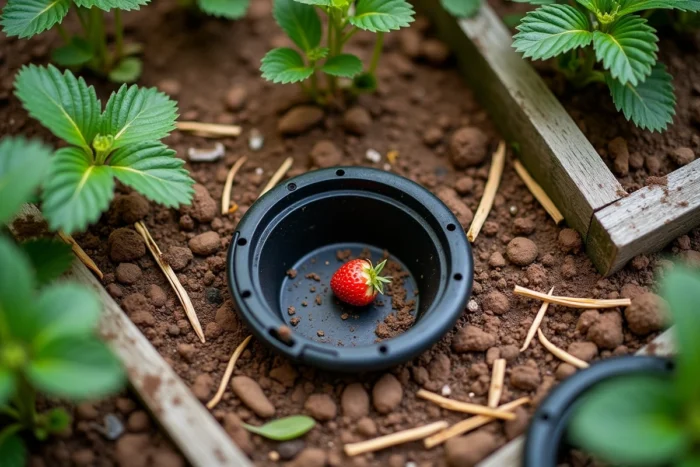
When to really act against pseudoophonus rufipes
The question deserves to be asked frankly. In a garden without strawberries, the pseudoophonus rufipes provides more benefits than it causes harm. Its consumption of weed seeds lightens the weeding workload, and its presence in the food chain nourishes the garden’s vertebrate auxiliaries.
Intervention is only justified when repeated damage occurs on strawberries or, more rarely, on other small fruits. In this case, physical barriers and light trapping offer concrete results without disrupting the balance of the vegetable garden. Using chemical products against an auxiliary beetle of crops weakens the garden’s natural defenses against far more problematic pests.