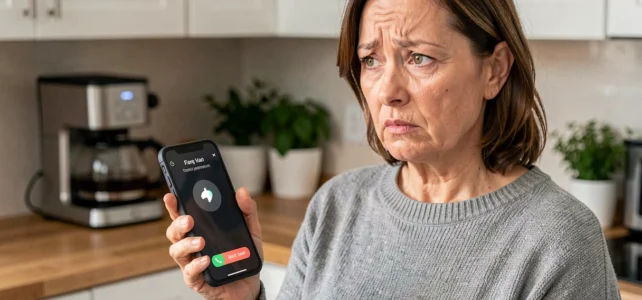
A missed call from 0187217777 appears on your phone, with no voicemail or explanatory SMS. The reflex of many French people is to type this number into a search engine, where results range from “Amazon delivery driver” to “phone scam.” The doubt is legitimate: phishing campaigns impersonating Amazon have multiplied in France in recent months, and distinguishing an authentic call from a fraud attempt requires a minimum of method.
How Amazon’s phone masking system works
The 0187217777 number is not the personal number of a delivery driver. Amazon uses an intermediary application that assigns a relay number to drivers when they attempt to contact a customer. The driver does not see your real number, and you do not see theirs. The number 0187217777 serves as a privacy gateway between the two parties.
This mechanism explains why calling this number back is of no real use. You reach an Amazon voicemail, with no possibility of speaking to a representative or taking action on your delivery. The connection between the driver and the relay number exists only during the delivery window. Several hours after the call, the connection is broken. You can find more information about the number 0187217777 by consulting the experiences of other recipients of this call.
This number is not premium-rate. Calling it back incurs no special charges, unlike the 089x numbers used in some classic phone scams. The distinction is technical but important: a number starting with 01 corresponds to a geographic area code for Île-de-France, and not to a value-added service.

Fake Amazon emails and real delivery calls: do not confuse the two threats
The confusion between the call from 0187217777 and “Amazon” scams largely stems from phishing campaigns circulating in parallel. In 2026, waves of fake emails imitating Amazon report a significant payment (sometimes over a thousand euros) and ask the victim to call a number to dispute the transaction.
This scenario has nothing to do with 0187217777. The fake emails redirect to pseudo customer service numbers aimed at stealing banking information. Amazon reminds on its help page that its legitimate emails come from identifiable domains (amazon.fr, amazon.com) and that the procedure “call this number to cancel a payment” does not exist in its official operations.
The warning signs differ by channel:
- A call from 0187217777 generally occurs during an active delivery window, when a package is on its way to your address. It lasts only a few seconds and does not ask for any personal information.
- A fraudulent email mentions an unusual amount, contains typographical errors, or comes from an address that does not end with an official Amazon domain. It systematically urges urgent action.
- A phishing SMS related to a fake package directs you to an external link where you are asked to pay customs fees or confirm your banking details. Amazon does not send this type of SMS for its standard deliveries.
Verify the origin of an Amazon call without calling the number back
Calling back 0187217777 resolves nothing. The right method is to check the status of your order directly from your Amazon account, via the app or the website. If a driver has tried to reach you, the package tracking usually shows a corresponding update (delivery attempt, package dropped off at a neighbor’s, returned to a pickup point).
Amazon never asks for your account credentials, password, or banking information over the phone. No legitimate call from Amazon requests sensitive data. If someone claiming to represent Amazon asks you for this type of information, it is a fraud attempt, regardless of the number displayed.
The French regulatory context has recently evolved regarding telemarketing. A ban on unsolicited commercial calls has been adopted, although field reports show that unwanted calls have not yet completely disappeared. This law does not apply to calls related to an ongoing order, which remain permitted since they fall under contract execution.
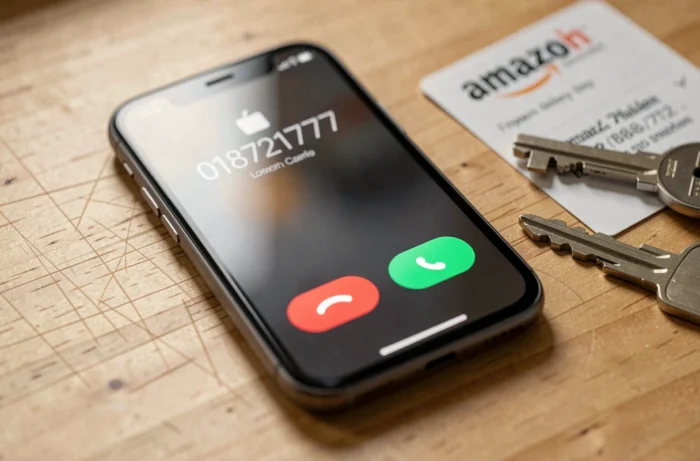
Amazon phone scam: concrete reflexes to adopt
In the face of the increasing number of scams by phone and email, a few simple checks can help distinguish a real delivery call from a fraud attempt.
- Check your Amazon app before calling back an unknown number. If no order is currently being delivered, the call likely has no connection to Amazon.
- Never provide banking information or credentials over the phone, even if the caller mentions your name or an order number. Scammers often obtain this data through prior leaks.
- Report suspicious calls on the platform 33700 or directly from your Amazon account. Reporting feeds anti-fraud databases used by operators and authorities.
- Check the shipping address of received emails. An authentic Amazon email will never ask you to call a number to dispute a payment.
Registration on Bloctel does not protect against phishing scams, which do not fall under traditional commercial solicitation. Even people registered on anti-solicitation lists can receive fraudulent calls.
The 0187217777 remains, according to available data, a relay number used by Amazon’s delivery service in France. Its presence in your call log almost always coincides with a package in transit.
The real threats related to Amazon come through other channels, mainly fraudulent emails and SMS, which mimic the brand’s appearance to prompt hasty action. Checking your order tracking before any other action remains the most effective response to a missed call from this number.